

Emotional Literacy Support Assistance (ELSA)

What is an ELSA?
An ELSA (Emotional Literacy Support Assistant) is a specially trained school staff member who helps children understand and manage their emotions. They are often teaching assistants or learning mentors who have completed specialist training with Educational Psychologists and have ongoing support to ensure they can help children in the best possible way.
Many schools across the UK use the ELSA programme to provide extra emotional support for children who need it. ELSA’s work with children individually or in small groups, depending on their needs, using evidence based early interventions to help children feel happier in school, improve their well-being, and even boost their learning.
What Do ELSAs Help With?
ELSA sessions focus on helping children with:
- Understanding their own feelings and those of others
- Coping with emotions like stress, grief, anger, and frustration
- Learning how to build and maintain friendships
- Growing in confidence and feeling good about themselves
Helping Birmingham Schools
To date, there are 73 schools across the city that have received ELSA training and are actively practising as ELSA schools. Across those schools (including primaries, secondaries, two special schools, and several infant schools), we have 85 wonderful ELSAs supporting young people to have a better understanding of emotional well-being!
“There have been improvements in behaviour. Children now recognise and name their emotions and are comfortable speaking with their teachers about it, rather than waiting to just tell me”
ELSA Feedback (one year post-training)
“I found it very interesting to learn about the physical events on the body when emotions are heightened”
ELSA Training Feedback
“Attendance has improved. Relationships with teachers have improved”
ELSA Feedback (one year post-training)
If you work in schools within Birmingham and would like any further information on ELSA training, please email ELSA@birmingham.gov.uk
Trauma Informed Attachment Aware Schools (TIAAS)
This whole-school training package will support schools on a Trauma and Attachment Awareness journey, which will equip staff with new knowledge, enabling them to develop ‘trauma-informed practice’. Based on internationally validated discoveries in neuroscience, this approach enables staff to notice, improve and value their skills in establishing brain-building relationships with children and young people.
An Attachment Aware School is a place where resilience is promoted and where the most vulnerable children are able to recover from trauma. This whole-school programme of support will help schools to progress on their journey to becoming a Trauma Informed Attachment Aware school. Through participating in this programme, staff are equipped with new knowledge and skills which enable them to apply trauma and attachment aware strategies in school.
The approaches used in this programme are based upon current and up to date theory and research in this important area of child development. Evidence suggests that attachment awareness in adults can lead to increased self-regulation in children (and adults). The capacity to self-regulate underpins emotional well-being and mental health, and enables the development of cognitive skills and learning.
A key element within the programme is Emotion Coaching. This is an evidence-based whole-school approach towards responding to children’s emotions. It is a way of interacting with children and young people, and promoting positive relationships. Emotion Coaching helps children to become more aware of their emotions and to manage their own feelings, particularly when children are experiencing strong emotions.
The Trauma Informed Attachment Aware Schools (TIAAS) programme involves:
- whole staff training and access to further training or workshops for groups of staff with different roles within school and parents/carers
- ongoing access to network meetings and CPD opportunities with other schools doing TIAAS, to support with implementation of these approaches over time
- Educational Psychologists supporting your school to embed these approaches through providing consultation and action planning with your Senior Leadership Team
- becoming a part of the Attachment Research Community (ARC) and using the ARC Audit tool to measure your school’s progress over time
- opportunity to work towards Bronze, Silver and Gold TIAAS certification to recognise and celebrate your school’s progress on this journey
Get in touch
For more information about how your setting can get involved, contact the TIAAS team at: TIAAS@birmingham.gov.uk
Video Interactive Guidance (VIG)
The following animation explains more about Video Interaction Guidance (VIG) and was produced by Kent Educational Psychology Service.
VIG is an evidence-based intervention that uses video clips to enhance communication within relationships.
The approach has been used successfully in a wide range of settings (including early years settings, schools, and families) around the world.
VIG is available to anyone who would benefit from improved relationships. In families, this can be parents and children. In schools, this can be school staff and pupils.
We are also able to deliver VIG remotely using video technology.
How can VIG help?
VIG will highlight the strengths in relationships that already exist, and then support those involved to build upon these strengths.
VIG actively engages those involved in the process. The use of video also allows the individual to see themselves communicating effectively. This can be very empowering and motivating.
For more information, please contact your setting’s visiting EP.
Video Enhanced Reflective Practice (VERP)
Video Enhanced Reflective Practice (VERP) is a strengths-based CPD approach that enhances the reflective practice of teachers and improves the emotional and social well-being of pupils.
VERP supports staff to enhance their communication and interaction skills. Staff will receive training on the importance of attuned interactions for emotional well-being and learning, and through the use of a video as a reflective tool, staff are supported to:
- Set and work on their own goals
- Identify their strengths
- Learn from what is going well
- Encourage and learn from peers
VERP is delivered by educational psychologists trained in Video Interaction Guidance (VIG), which is an evidence-based intervention that develops communication and interaction within relationships. Originally developed for use with parents and children, VIG has been used successfully in a wide range of settings around the world.
For more information, please contact your setting’s visiting EP.
Social Communication, Emotional Regulation, Transactional Support (SCERTS)
SCERTS© stands for Social Communication, Emotional Regulation, Transactional Support (the changes we make and things we put in place to support children).
SCERTS is a research-based framework for supporting children with social communication differences to develop their social communication and emotional regulation skills – both of which play a key role in learning. The approach has been created by a multidisciplinary team of professionals, including Occupational Therapists and Speech and Language Therapists (Prizant et al., 2006)
One of the key ideas behind the approach is that individuals with social communication difficulties are often less motivated by the social world (e.g. pay less attention to social cues, like faces and voices) and can therefore miss opportunities to learn and develop these skills
Watch our short video to find out more
Why do we recommend using SCERTS?
SCERTS is different from other interventions because it focuses on developing social motivation by making interactions rewarding and desirable, so that children are more likely to engage in them. SCERTS seeks to promote spontaneous social communication skills by using natural moments and everyday interactions as learning opportunities, as opposed to being a separate intervention that takes place outside of the classroom.
Its focus on emotional regulation is based on the idea that children need to be emotionally regulated (e.g. be able to cope with transitions, accept support from others) to be ready to learn.
The emphasis on both social communication and emotional regulation means that SCERTS is a more holistic approach than some alternative interventions.
Who is it for?
SCERTS is an all-age model (into adulthood) for those with social communication difficulties. A diagnosis of autism is not necessary.
The SCERTS approach can be used with children across all levels of need (verbal and non-verbal/pre-verbal), and all cognitive abilities.
SCERTS is designed for use within the home, school (mainstream and special), and even vocational settings.
Key benefits of SCERTS
SCERTS is a developmental model. It uses three stages to identify a child’s current communication skills. Each stage has priority skills which are informed by research. This helps parents, carers, and educators know where to start and gives children the best opportunity to make progress.
Some other benefits include:
- SCERTS follows an assess, plan, do, review cycle, and has an in-built assessment process to help identify target skills and review progress.
- It takes a positive, strengths-based approach – building on what is working well and recognising the expertise of staff, and parents and carers.
- SCERTS is best used as a multiagency approach, bringing together a range of professionals and people who support the child.
Want to find out more?
If you’re a parent or carer, please contact your school’s special educational needs coordinator (SENCo) to see whether your child’s setting has received training in using the SCERTS framework. You can also visit the official SCERTS website for further details about the approach
If you’re an educator, please see the section below for more information.
How we can support your setting with SCERTS
We offer training to help staff develop pupils’ social communication and emotional regulation skills using the SCERTS framework and approaches.
For details of upcoming courses, visit our centrally held training webpage: Birmingham Educational Psychology Service – Centrally Held Training | Birmingham Education Support Services
We can deliver similar training (outlined above) to individual schools and settings, support with creating and implementing a SCERTs plan for individual pupils, or groups of pupils with similar skills, and support for embedding SCERTS approaches within your setting, using a range of tools we have developed.
To find out more about SCERTS, please speak to your setting’s visiting EP email EducationalPsychology@birmingham.gov.uk.
How SCERTS is helping schools to make a difference
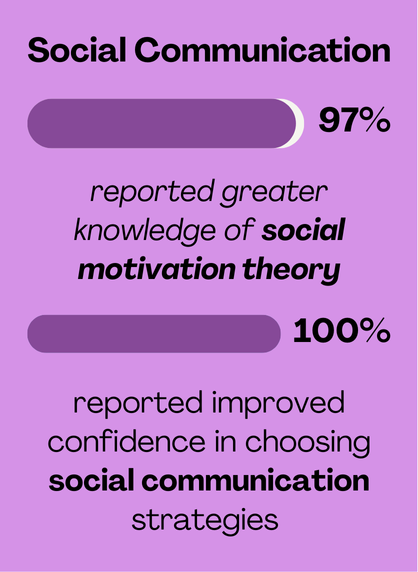
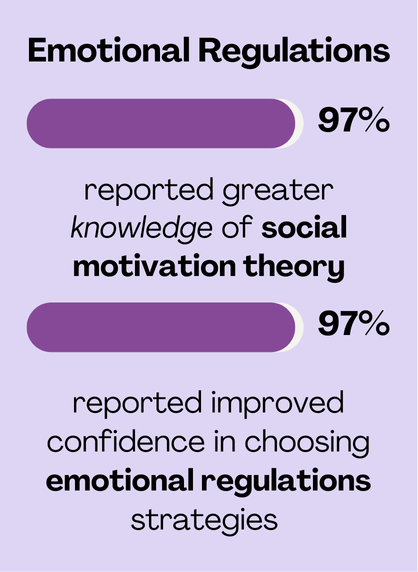
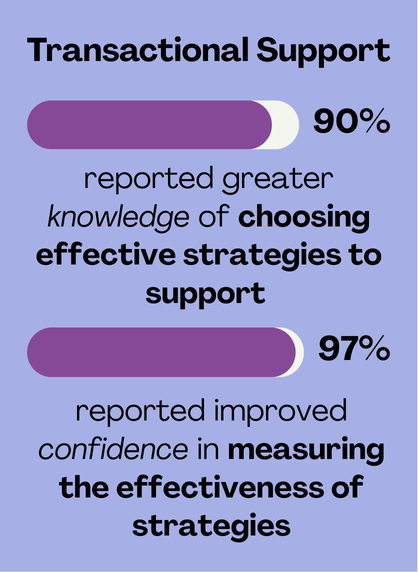
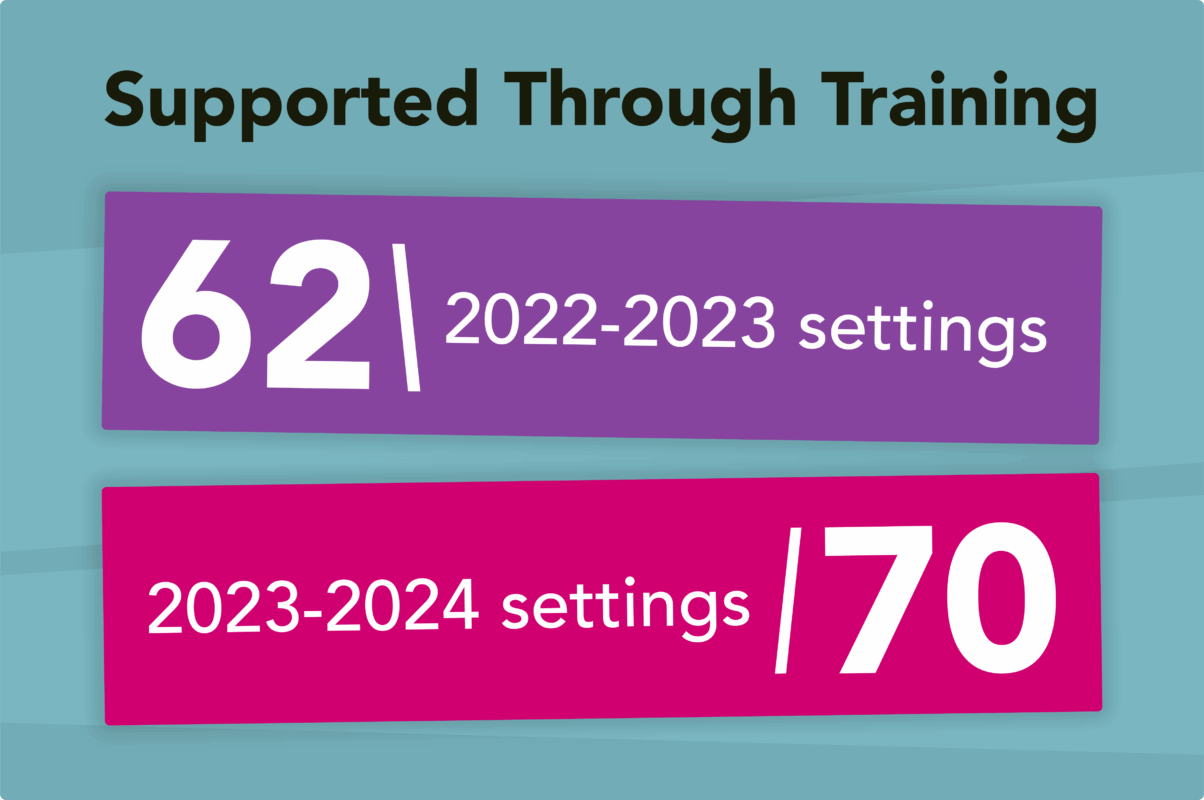
“It will help me identify targets and strategies to further support our pupils. It has structure and a purposeful way of measuring impact”
“I thought the training was excellent and it’s the first time, in a long time, I’ve felt compelled to take action”
“I didn’t think my child was making any progress. It’s been so great to talk about all the things they can do”